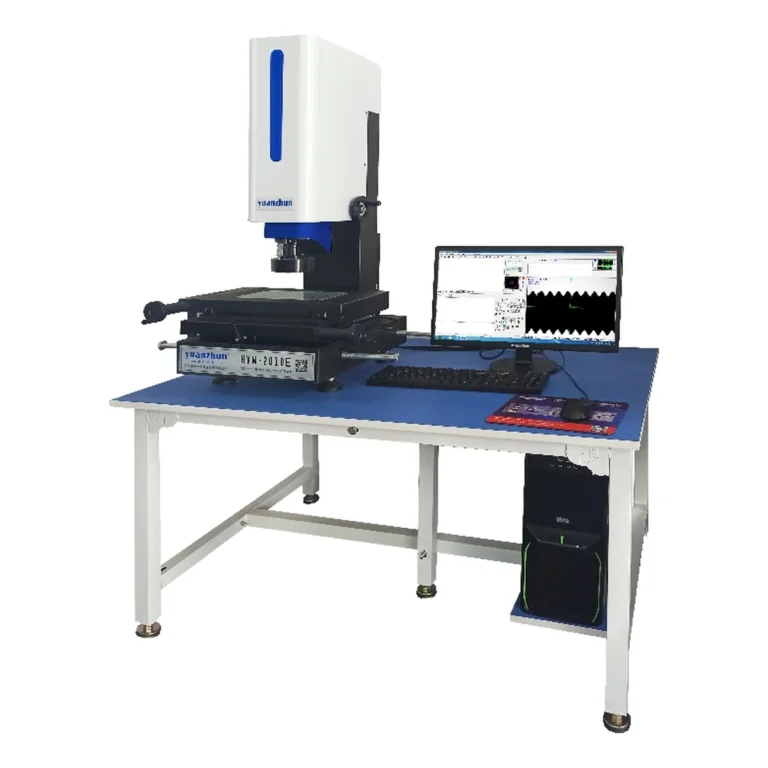
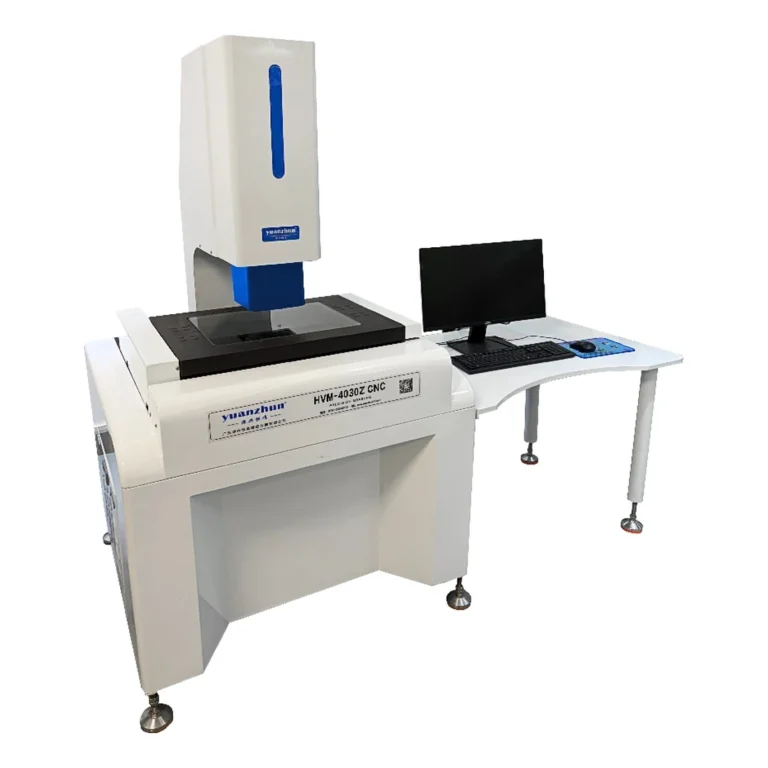
Choosing between manual and automatic electrode burr measurement begins with the inspection requirement. Define the edge characteristic, viewing direction and acceptance method first. Automation should support an agreed measurement routine rather than hide an unclear feature definition.
Establish one measurement task for the comparison
Use the same drawing requirement, representative samples and reporting definition when evaluating two workflows. Document how the sample is held and which boundary is measured. Thin or reflective specimens should be included in realistic conditions.
Request the specification for each selected model and configuration. Optical magnification, motion control and scale resolution describe different parts of the system; none should be treated alone as proof that the required result can be achieved.
Map the manual workflow
List loading, orientation, positioning, focusing or imaging, measurement review and report preparation. A manual instrument may be useful for varied samples or an initial application trial, but the actual suitability depends on the required features and working process.
Review how an operator repeats the setup. Measure again after removing and repositioning the sample, and record the settings and fixture information needed for another operator to reproduce the routine.
Map what the automatic configuration does
Identify the specific steps controlled by the proposed instrument. Confirm the supported routines, rotary fixture if applicable, image acquisition and output functions. Automatic measuring motion does not necessarily include automatic sample feeding, sorting or connection to a production line.
If those functions are required, define the handling and interface scope separately. Specify how samples are identified and how an unclear result or loading problem will be handled.
Compare the complete cycle and records
Time the process from loading through result review and report completion. Include any reorientation, fixture changes and operator intervention. Use representative batches rather than extrapolating from the fastest motion segment.
Review repeat measurements after reloading, variation across the samples and the agreed method of checking the result. Confirm the sampling plan and traceability fields for the production process; choosing an automatic machine does not by itself define the sampling policy.
Select a configuration from the trial
The HVM MC manual instrument and MC-CNC automatic instrument provide model-specific starting points. Review their published configuration and confirm accessories, software and measurement conditions in the proposal.
For the underlying optical method, see the battery burr inspection workflow. Use the battery electrode application page to prepare a review, and discuss special feeding or interfaces through custom inspection automation. Base the purchasing decision on the agreed task, demonstrated routine and written acceptance criteria.